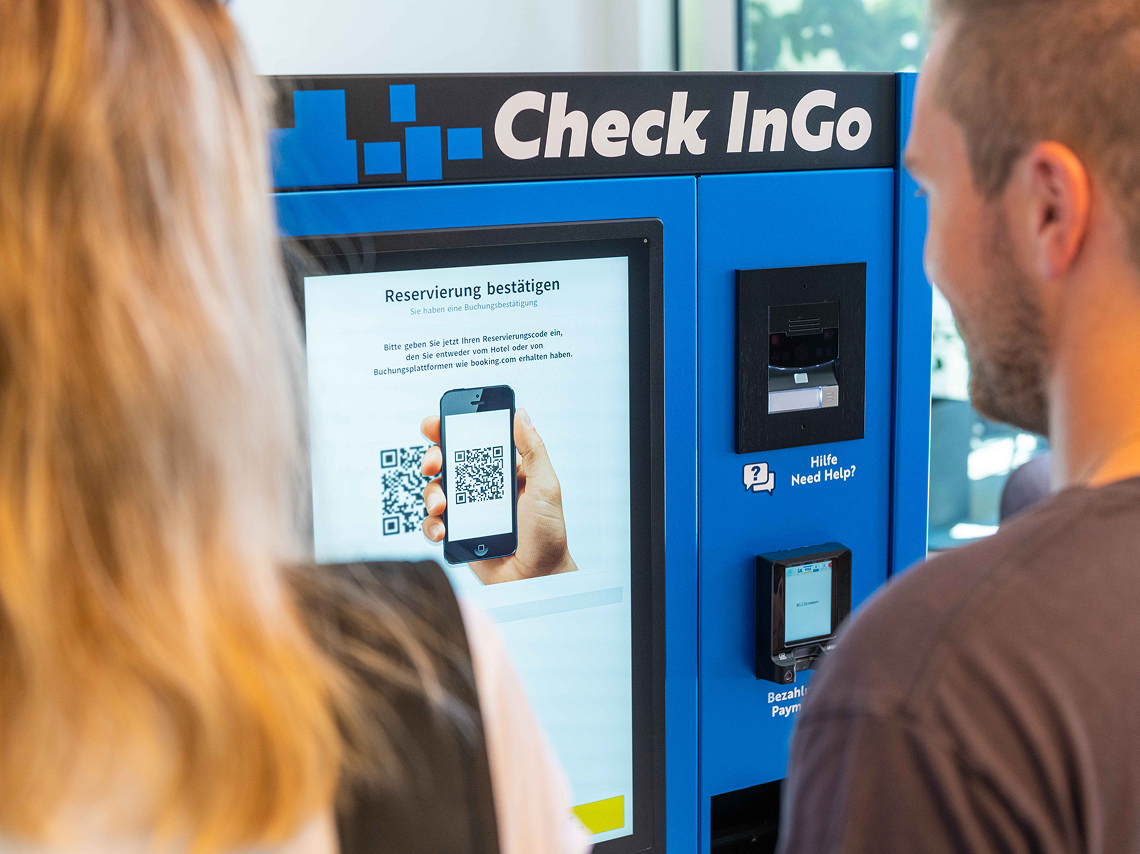
At the core of every Check-InGo terminal is a 22-inch touchscreen that functions as the primary interface between guests and the self-service system. Because all user interaction is mediated through the display, its performance, reliability, and long-term availability directly influence both guest experience and operational continuity. But which display requirements matter most in this type of deployment, and how does ASUT ensure the touchscreen remains reliable over the lifecycle of the solution?
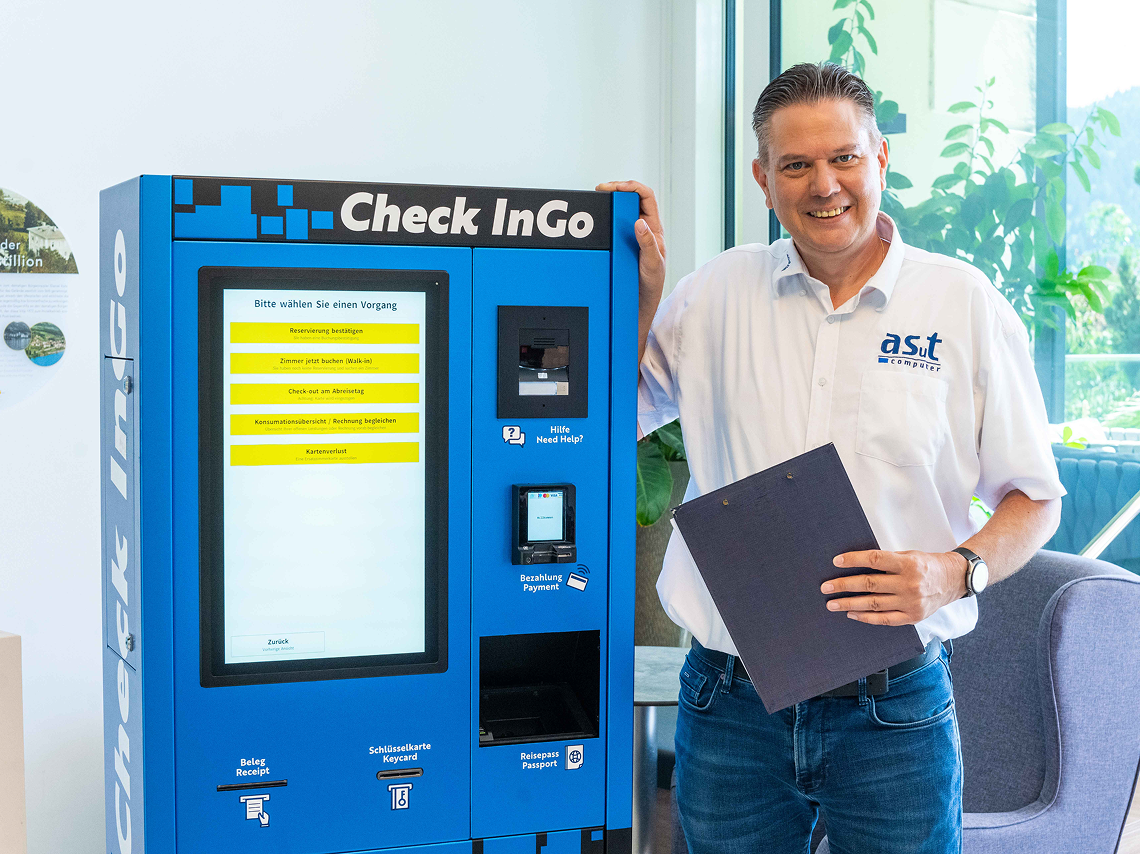
Automating Check-In and Check-Out Operations
Traditional front desk workflows place significant demands on hospitality staff. While in-person service offers flexibility, it is labor-intensive, difficult to scale, and prone to peak-hour bottlenecks. Staffing levels must be adjusted continuously to match fluctuating demand, often resulting in inefficiencies and longer waiting times for guests.
These challenges are not unique to hotels. Across public-facing environments, any process that relies heavily on manual registration, identification, or payment introduces dependency on staff availability. Digitalizing these workflows provides a scalable alternative that improves throughput while reducing operational load.
With more than 30 years of experience in digitalization, ASUT identified recurring inefficiencies in traditional check-in and registration processes. Check-InGo was developed to address these challenges by transferring routine front desk operations to a self-service model, without compromising usability or control.
Using the kiosk, guests can complete the entire check-in process autonomously. By scanning a booking reference or QR code, users confirm their reservation, select an available room, and complete payment directly at the terminal. Walk-in guests can view real-time availability and finalize a booking within minutes. Upon completion, the kiosk issues a key card, granting immediate access without staff intervention.
Additional functionality such as multi-language support, passport scanning, digital form completion, key card reissuing, and optional services like breakfast or parking is fully integrated. This allows hotels to automate a significant portion of daily front desk operations, improving throughput, reducing waiting times, and lowering operational costs.
The Touchscreen as the Central Interface
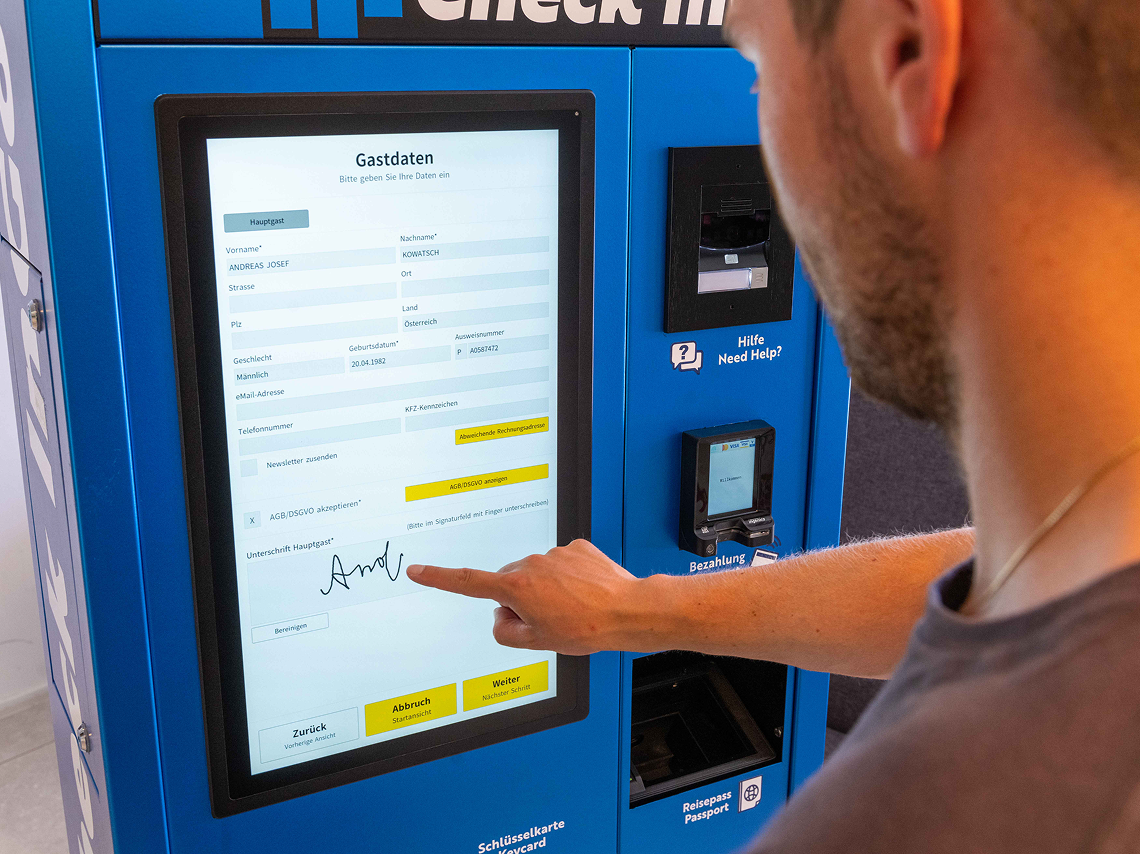
Within the Check-InGo platform, the touchscreen plays a critical role in both usability and system stability. During development, ASUT evaluated multiple display options before selecting the Beetronics 22HB9M/U1 touchscreen as the standard display across its kiosk deployments.
The 22-inch format provides sufficient screen space for clear navigation and on-screen guidance, while maintaining a compact footprint suitable for hotel lobbies and other public spaces. The display features a robust metal housing and supports panel-mount integration using a standardized cut-out, allowing it to be incorporated into kiosk enclosures without custom mechanical adaptations.
Designed for continuous daily operation, the touchscreen is well suited for unattended environments with high user traffic, where consistent performance over time is essential.
Readability and Operational Stability in Public Environments
In self-service applications, screen readability is a critical factor. The Beetronics touchscreen features a matte, anti-glare front panel that maintains visibility under varying lighting conditions commonly found in hotel lobbies and public areas. Screen brightness can be adjusted manually or automatically via an integrated ambient light sensor, depending on the installation environment.
Beyond immediate usability, long-term availability played a key role in ASUT’s display selection. Changes in display dimensions or specifications can trigger costly redesigns or revalidation efforts. By standardizing on a single touchscreen platform, ASUT ensures consistent mechanical dimensions, performance characteristics, and integration requirements across both current installations and future deployments.
A Unified Display Architecture Across the Kiosk Portfolio
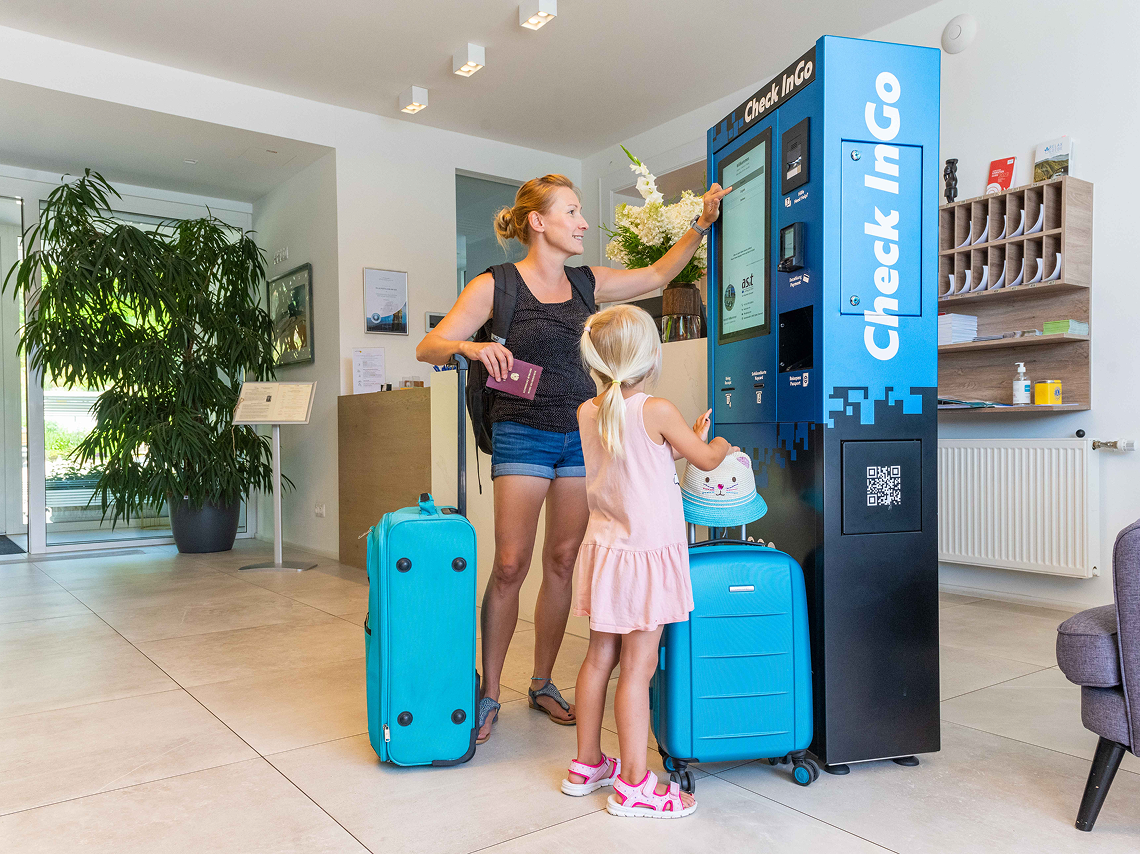
While the Check-InGo configuration described here uses a 22-inch touchscreen, the underlying display architecture is consistent across ASUT’s broader kiosk lineup. Different installations may require alternative screen sizes, brightness levels, or aspect ratios depending on the application and environment.
By standardizing on Beetronics industrial touchscreens, ASUT maintains consistent behavior, mounting principles, connectivity, and software compatibility across all variants. This unified approach reduces integration complexity, simplifies maintenance, and allows new kiosk configurations to be introduced without redesigning the core interface layer.
For system integrators and kiosk manufacturers, this provides a stable hardware foundation that supports scalable deployments, customer-specific configurations, and long-term platform consistency.
Supporting the Long-Term Transition to Self-Service
The transition toward automated guest services is a long-term development rather than a one-time implementation. The Check-InGo platform is designed to support gradual rollout, expansion, and adaptation as operational requirements evolve.
With a standardized and scalable hardware foundation in place, ASUT is well positioned to support a growing number of organizations worldwide in streamlining registration and access processes, while maintaining predictable system behavior and long-term maintainability in public-facing environments.